
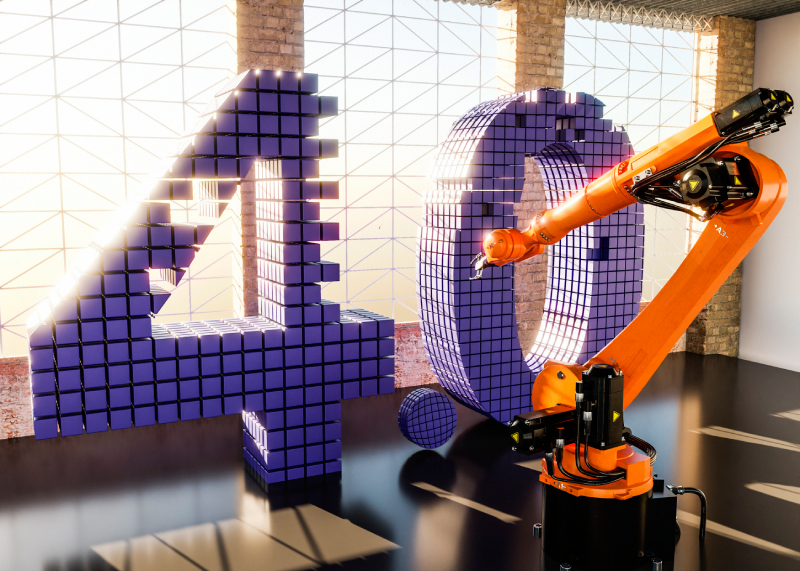
There has never been a more transformative phase than Industry 4.0: it defines the Fourth Industrial Revolution, where smart manufacturing systems integrate digital advancements like robotics, artificial intelligence (AI), and the Industrial Internet of Things (IIoT) with physical workflows.
These innovations enhance automation through real-time data analytics and create adaptive value chains responsive to customer needs. Therefore, this revolution builds on decades of operational digitization while delivering unprecedented efficiency—naturally inviting deeper exploration of the historical shifts that shaped its emergence.
Historical Progression to the Fourth Industrial Revolution
From the roar of steam engines to the silent calculations of cloud computing, humanity’s industrial journey showcases remarkable ingenuity. Each revolution didn’t just advance production—it rewired society’s expectations through transformative leaps forward. Think of these shifts as stepping stones building momentum toward today’s technological tipping point.
The First Industrial Revolution (1760–1840) began with water-powered mechanization, replacing manual labor with steam-driven machinery. Factories emerged as economic powerhouses, laying railroads and forging our industrial identity.
Second Industrial Revolution (1870–1914): Electricity became production’s heartbeat, sparking assembly-line innovation. Mass-produced goods flowed from automated factories, fueling global trade networks we still rely on today.
The Third Industrial Revolution (1950s–2000s) introduced computers and connected continents through digital networks. Automation expanded, letting machines handle repetitive tasks while humans focused on strategic oversight—this digital leap built bridges to smarter systems.
Now, the Fourth Industrial Revolution merges physical workflows with cyber-physical systems. Data analytics drive predictive maintenance, smart sensors self-optimize workflows, and autonomous robotics collaborate in real time. Each innovation builds on three centuries of accumulated progress, accelerating change beyond previous imagination.
Advantages and Impacts of Embracing Industry 4.0
If you’re wondering, “What is the Fourth Industrial Revolution?” its true value lies in transforming operations across sectors. By adopting Industry 4.0 technologies through smart manufacturing solutions and IIoT integration, businesses aren’t just improving efficiency – they’re creating self-reinforcing systems that amplify sustainability while fostering innovation.
This transformation drives more than operational gains. When companies implement Industry 4.0 frameworks correctly, they’re not simply upgrading tools – they’re architecting interconnected enterprises where production flows like water. Through real-time collaboration between machines and personnel:
- Predictive analytics minimize unexpected equipment downtime
- Integrated production lines automatically adjust output quality parameters mid-process
- Energy consumption analytics optimize power usage without manual intervention
Navigating the Challenges of the Fourth Industrial Revolution
With great change comes great challenges—a reality that businesses must acknowledge. Industry 4.0 brings new technologies but also new risks that require careful consideration.
In a world of digital everything, cybersecurity is at the top of everyone’s mind; hence, interconnectivity introduces significant vulnerabilities. Increased reliance on smart devices means your production lines, networks, and data face elevated risks of cyberattacks. To mitigate these cybersecurity risks, businesses are recommended to:
- Invest in robust cybersecurity measures.
- Implement real-time threat detection systems.
- Establish comprehensive data protection protocols.
Job displacement due to automation is another big issue. While Artificial Intelligence and Machine Learning improve efficiency, they can disrupt traditional roles. This shift demands a focus on workforce adaptation. Therefore, companies and governments are investing in retraining programs and initiatives to align skills with evolving job markets. These efforts ensure that workers can transition amidst rapid tech advancements.
As Industry 4.0 rolls out, AI and data privacy ethics become critical. Businesses have to ensure robust data protection and follow ethical guidelines to keep personal data secure and prevent the misuse of personal information.
Understanding these core challenges becomes essential for the next phase.
As we turn our attention to the future, consider these advancements within the context of the Fourth Industrial Revolution, where emerging trends set the stage for continued change.
Read More : Inspiring the Next Generation of Manufacturers and Attracting the Next Generation Manufacturing Workforce
Industry 4.0 Future Trends
As we look to the future, Industry 4.0 stands poised to advance its transformative journey, unlocking unprecedented innovations through three emerging technologies. Quantum computing will push processing power beyond classical boundaries to tackle optimization challenges that stump today’s supercomputers. Simultaneously, nanotechnology’s atomic-scale engineering creates materials with enhanced strength and conductivity—revolutionizing medical devices and sustainable manufacturing alike. The Internet of Bodies (IoB) integrates biosensors and implants to blur the lines between human physiology and digital ecosystems. To capitalize on these shifts, continuous adaptation isn’t optional—it’s your strategic imperative.