Manufacturing Innovations

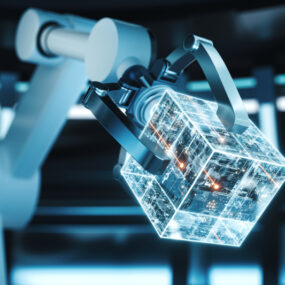
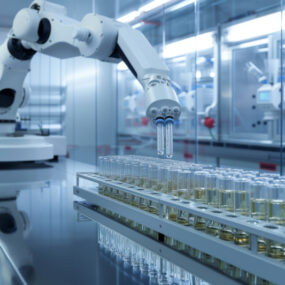
Manufacturing Innovations are transforming product creation worldwide. Robots and smart systems are revolutionizing advanced manufacturing processes with their efficiency. Creation of smaller components is possible now with advanced miniaturization technologies.

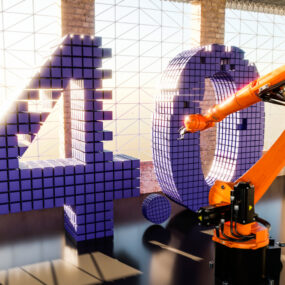
Industry 4.0 & Beyond

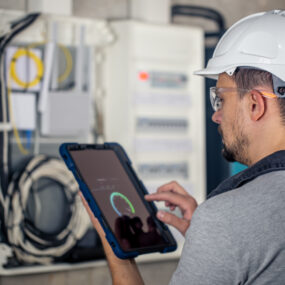
Experience the next evolution of manufacturing through digital transformation and connectivity with Industry 4.0 & Beyond. Create smart factories with machines and systems connected by Industrial IoT. Experience excellent predictive maintenance and quality control with Artificial Intelligence in Manufacturing.

Research & Development

Experience exploration and discovery in various fields driven by research and development. Shape a new future with breakthrough technologies and methodologies developed through next-generation research. Tackle complex challenges with international collaboration fostered by global innovation programs.

What is the Fourth Industrial Revolution? Industry 4.0 Explained

There has never been a more transformative phase than Industry 4.0: it defines the Fourth Industrial Revolution, where smart manufacturing systems integrate digital advancements like robotics, artificial intelligence (AI), and the Industrial Internet of Things (IIoT) with physical workflows. These innovations enhance automation through real-time data analytics and create adaptive value chains responsive to customer

Inspiring the Next Generation of Manufacturers and Attracting the Next Generation Manufacturing Workforce

There has never been a more exciting time to witness American manufacturing innovation firsthand, with companies across the nation opening their facilities every October to showcase cutting-edge production methods. While Manufacturing Day originally started as a single-day event to highlight factory operations, it’s evolved into a critical platform for dispelling outdated stereotypes and revealing modern

Industrial Robots: What They Are and Their Essential Role in Modern Manufacturing

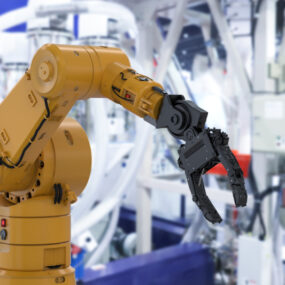
Think of industrial robots as highly skilled workers reshaping the manufacturing landscape. They incorporate advanced components like sensors, controllers, and actuators—all mounted on flexible joints and links to form precise robotic arms. What sets these machines apart is their ability to automate repetitive, continuous tasks while adapting to new instructions seamlessly. By executing programmed instructions,

AI-Powered Quality Control: The Next Frontier in Manufacturing Excellence

Traditional quality control methods in manufacturing often rely on statistical sampling and human judgment – two factors that can limit accuracy and scalability. If your facility still depends on manual inspections, you might be leaving quality gaps undetected due to inconsistent human assessments and sample-based verification. That’s where AI-powered quality control emerges, leveraging advanced machine

What is Predictive Maintenance (PdM), and Why is it Important?

Predictive Maintenance (PdM), also known as Condition-based or Proactive Maintenance, combines advanced sensors with machine learning to anticipate equipment failures before they occur. While reactive maintenance operates on failure-driven protocols, which often cause expensive downtime, preventive maintenance relies on rigid schedules that rarely align with actual equipment conditions. In stark contrast, PdM uses real-time vibration

Understanding Smart Sensors in Manufacturing for Enhanced Operations

Sensors in manufacturing have monitored processes for decades, but until recently, technical constraints like system noise limited their value. Today, the Internet of Things (IoT) has empowered sensors with microprocessors, transforming them into Smart Sensors capable of locally processing complex data. These Smart Sensors analyze measurements instantly, make decisions without external systems, and share insights

What is 4D Printing Technology?

4D Printing represents an advanced form of additive manufacturing that utilizes smart materials capable of transforming their shape and properties autonomously. While traditional 3D Printing produces static objects with fixed forms, 4D Printing introduces smart materials that react to environmental stimuli like temperature fluctuations, light exposure, or moisture levels. These responsive materials fundamentally alter their

Micro-Machining: A New Era of Precision Manufacturing

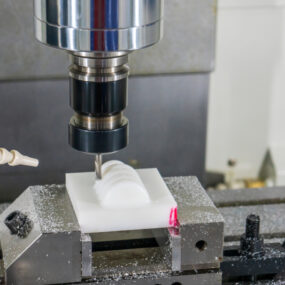
As you explore advanced machining methods, micro-machining stands out as a revolutionary approach, reshaping precision manufacturing through micro-scale fabrication techniques. Whether you work with electronics or aerospace systems, micro-machining allows you to create ultra-precise micro components at micrometer scales, achieving levels of miniaturization traditional methods can’t match. This technique drives miniaturization by producing micro components

What is Nanomanufacturing? Exploring the Future of Production

To understand nanomanufacturing and how nanotechnology helps in manufacturing, let’s address its core concept: Nanomanufacturing involves manipulating materials at the atomic or molecular scale, operating within the nanoscale dimensions of 1 to 100 nanometers. This is a range so small that it enables unique properties that are unattainable with traditional methods. This systematic integration of

The Advantages of 3D Printing for Mass Production

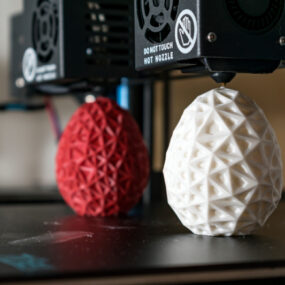
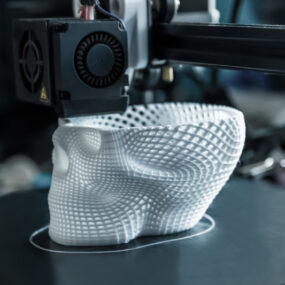
Imagine building objects like assembling digital Legos – essentially 3D Printing, an additive manufacturing process creating three-dimensional items layer by layer from digital designs. This technology answers today’s demands for efficient mass production by eliminating the bulk material removal required in traditional manufacturing. Since emerging in the 1980s, these printers have evolved from clunky prototypes