
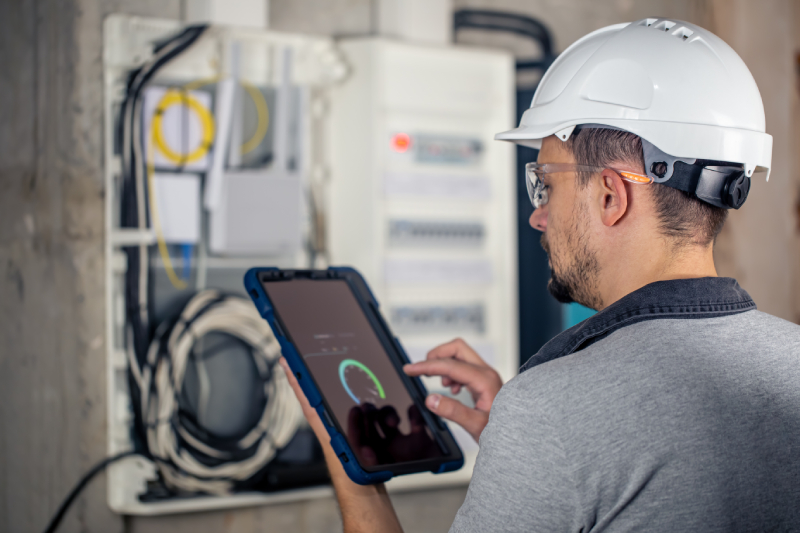
Predictive Maintenance (PdM), also known as Condition-based or Proactive Maintenance, combines advanced sensors with machine learning to anticipate equipment failures before they occur. While reactive maintenance operates on failure-driven protocols, which often cause expensive downtime, preventive maintenance relies on rigid schedules that rarely align with actual equipment conditions. In stark contrast, PdM uses real-time vibration analysis and temperature tracking to trigger maintenance actions precisely when needed. These innovations collectively reduce downtime while extending asset lifespan dramatically.
How Predictive Maintenance Works
Predictive Maintenance (PdM) is a manufacturing strategy combining sensor networks and machine learning to predict equipment failures before operational impacts occur. Through three core steps, it transforms raw equipment data into actionable insights that prevent unexpected downtime.
Step 1: Data Acquisition Via IoT Ecosystems
Sensors embedded in critical machinery monitor vibration patterns, thermal outputs, and electromagnetic signatures. Connected IoT gateways consolidate this live-streamed data across multiple assets, forming the diagnostic bedrock for predictive algorithms.
Step 2: Analytic Baseline Establishment
Once aggregated, historical datasets undergo machine learning analysis to define normal operating baselines across three key parameters :
- Temperature fluctuation thresholds
- Harmonic vibration profiles
- Electrical current waveforms
Deviations from these established ranges trigger early warnings of potential component degradation.
Step 3: Prescriptive Interventions
When anomalies surface through infrared imaging, ultrasonic testing, or vibration spectroscopy tools, automated platforms generate prioritized work orders containing:
- Impact severity assessments
- Replacement component specifications
- Ideal intervention timing windows
This fusion of real-time data streams and prognostic analytics enables maintenance scheduling during planned downtime windows instead of catastrophic failures – a key distinction from outdated preventive models shown in previous sections.
Key Benefits of Predictive Maintenance
Implementing Predictive Maintenance (PdM) delivers multi-dimensional advantages that transform manufacturing operations. The primary benefits are reduced unexpected breakdowns, enhanced equipment lifetime, and direct cost optimization. By preempting equipment failures, before they occur, PdM creates a significant boost in operational reliability through these specific mechanisms:
Competition levels escalate daily across manufacturing sectors; hence, downtime minimization becomes critical for maintaining productivity. This strategy enables precise scheduling of maintenance during non-peak hours through:
- Continuous vibration pattern monitoring
- Thermal trend analysis across critical assets
- Automated workflow trigger protocols
What does this operational vigilance actually deliver? Improved asset lifespan emerges as the second core benefit. Early detection capabilities – demonstrated through infrared imaging and ultrasonic testing applications – reduce component wear rates compared to preventive approaches.
The financial implications? By combining reduced inventory carrying costs with lower energy consumption profiles, companies report considerable annual maintenance budget savings.
Finally – and perhaps most critically – enhanced workplace safety emerges from eliminating surprise equipment failures. When maintenance teams operate within scheduled protocols rather than crisis responses:
- There is an increase in critical safety check compliance rates.
- High-risk repair scenarios decrease.
- OSHA reportables decline across all production areas.
This cascade of benefits explains why most manufacturers now prioritize PdM adoption. As we transition from theoretical benefits, let’s navigate the practical realities in “Overcoming Implementation Challenges in Predictive Maintenance Systems.”

Overcoming Challenges in Implementing Predictive Maintenance
Implementing predictive maintenance (PdM) might feel overwhelming initially, particularly when upgrading legacy equipment. Some industrial machines simply weren’t built for smart sensors or machine learning integration, presenting an immediate technological hurdle. What can be done? Consider retrofitting options like Plug and Play (PnP) Technology – this approach helps bridge the gap between dated machinery and advanced monitoring capabilities.
Interoperability challenges emerge when connecting PdM systems with existing setups like ERP or MES platforms. Quick fact: Many manufacturers cite API alignment as their most persistent integration bottleneck. While developing custom middleware adds upfront costs, prioritizing standardized protocols eases long-term scalability concerns.
- Collect vibration signatures through IoT-enabled actuators
- Implement edge computing for real-time waveform analysis
- Establish redundant data pipelines via cloud backups
Don’t underestimate the human element: Many implementations struggle with inadequate data literacy. Build expertise through:
- Collaborations with AI specialists
- Workforce upskilling programs for machine learning fundamentals
Success requires dual investment – Data Governance Frameworks for quality assurance while fostering a continuous improvement culture. By addressing system integration, skill development, and operational alignment holistically, manufacturers transform PdM challenges into performance accelerators.
Final thoughts:
With phased planning and ecosystem partnerships, you turn implementation hurdles into competitive differentiators – natural segues to our discussion on scaling PdM ROI through operational refinement.
Read More : Understanding Smart Sensors in Manufacturing for Enhanced Operations
Predictive Maintenance as a Strategic Tool
Optimizing maintenance strategies remains challenging yet absolutely critical for modern manufacturers. Predictive Maintenance (PdM) emerges as the definitive solution: this proactive approach eliminates unexpected equipment failures through precision scheduling while maximizing operational uptime.
Want concrete results? PdM’s sensor-driven analytics predict component degradation 8-12 weeks earlier than human inspections alone. This strategic advantage prevents emergency repairs, extends asset lifespans, and reduces workplace hazards through planned interventions.
Digital transformation reshapes industries: PdM transitions from optional enhancement to strategic cornerstone, driving sustainable growth. Maintenance teams leverage machine learning insights to:
- Identify critical failure precursors using vibration analytics.
- Optimize spare parts inventory across multi-site installations.
- Automate work orders synchronized with production calendars.
The outcome? Uninterrupted operations generating profitability increases through cost avoidance strategies – particularly impactful for decision-makers managing capex/opex balance sheets.
Ultimately, C-suite executives must recognize: Implementing Predictive Maintenance (PdM) transcends maintenance protocols to redefine business competitiveness through the following:
- Strategic asset lifecycle management
- Reductions in downtime costs
- Fewer OSHA-reportable incidents through scheduled interventions
Final analysis: Companies dismissing PdM as mere “preventive maintenance 2.0” risk catastrophic competitive erosion. Those adopting it as a boardroom imperative gain:
- Operational cost advantages.
- Enhanced corporate sustainability metrics.
- Real-time decision-making frameworks for capital planning cycles.