
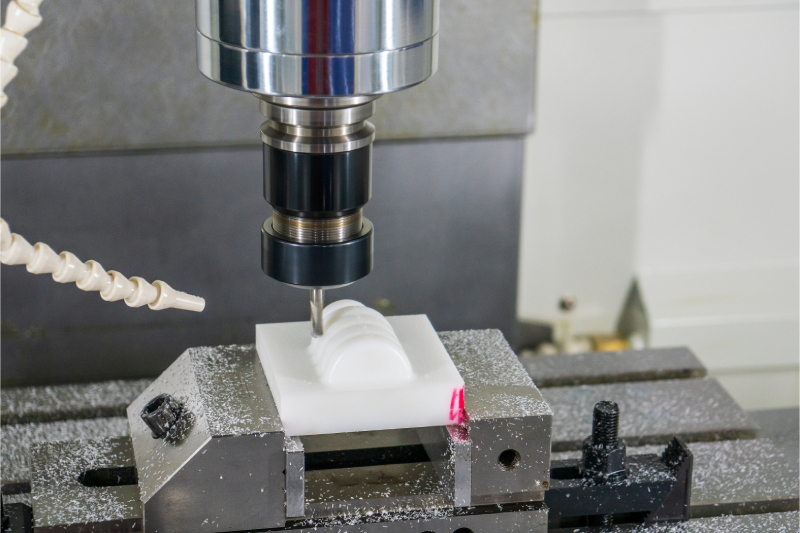
As you explore advanced machining methods, micro-machining stands out as a revolutionary approach, reshaping precision manufacturing through micro-scale fabrication techniques. Whether you work with electronics or aerospace systems, micro-machining allows you to create ultra-precise micro components at micrometer scales, achieving levels of miniaturization traditional methods can’t match.
This technique drives miniaturization by producing micro components and intricate micro-features critical to industries like aerospace, medical devices, and electronics, where precision is paramount. When precision is paramount, micromachining’s advanced tolerances let you surpass conventional limitations—establishing it as the future of precision-driven fabrication.
Defining Micro-Machining and Its Distinctive Features
Micromachining, a term synonymous with ultra-fine material removal, refers to manufacturing processes operating at micrometer scales where features smaller than 1mm is crafted. While you might associate precision manufacturing with conventional methods, the International Academy for Production Engineering Research (CIRP) sets clear benchmarks: processes are classified as micro-machining only when tool diameters and feature sizes fall between 1-500µm, matching workpiece grain dimensions at nanoscale levels.
To qualify under CIRP standards, three criteria must be met:
Tool dimensions: Cutting tools ranging from 1µm to 500µm in diameter
Material interaction: Undeformed chip thickness comparable to the workpiece’s grain size
Precision threshold: Critical edges maintained within micrometer/nanometer tolerances
This framework elevates Micro-Machining through key differentiators:
Precision & Scale: Achieves sub-millimeter tolerances unobtainable with standard CNC systems
Tool Complexity: Requires microscale cutting implements with specialized coatings/metrology
Material Versatility: Processes brittle ceramics and temperature-sensitive polymers without surface degradation
Industry Applications: Dominates semiconductor wafer dicing and biomedical stent manufacturing
As conventional machining struggles with sub-500µm features, we transition to exploring specialized micro-machining processes that overcome these limitations through advanced thermal and mechanical approaches.
Exploring Diverse Micro-Machining Methods
In exploring Micro-Machining, you’ll discover four key process categories designed for diverse material requirements and precision needs: mechanical, thermal, chemical, electrochemical, and hybrid techniques.
Mechanical Micro Machining
Micro Milling: Uses rotational cutters to create complex micro-geometries.
Micro Turning: Shapes cylindrical components through precision rotation.
Micro Drilling: Generates micrometer-scale holes with ultra-fine drill bits.
Additional methods: Micro Grinding, Ultrasonic Machining (Micro-USM), Abrasive Jet Machining (Micro-AJM), and Micro Focused Ion Beam Machining (Micro-FIB).
These methods utilize physical contact between the tool and workpiece, achieving material removal through exacting mechanical forces.
Thermal Micro Machining
Micro-EDM: Vaporizes conductive metals with controlled electrical sparks.
Micro-LBM: Melts materials using concentrated laser energy.
Micro-EBM: Employs electron beams for aerospace-grade components.
In contrast to mechanical methods, thermal micro-machining leverages heat rather than physical contact for shaping operations.
Chemical and Electrochemical Methods
Chemical Etching: Dissolves materials via reactive solutions.
Electrochemical Machining (ECMM): Removes metal ions through electrolysis.
As another critical distinction, these non-contact processes prevent surface stress in sensitive materials like medical alloys.
Hybrid Micro Machining
Combined Hybrid: Blends thermal and electrochemical processes.
Assisted Hybrid: Enhances machining with ultrasonic or vibration support.
By merging multiple methods, hybrid approaches unlock precision thresholds that individual processes alone can’t reach.
With such a robust arsenal of techniques, engineers can address virtually any micro-machining challenge.
Essential Applications Driving Micro-Machining Adoption
There’s no denying micro-machining’s indispensable status in modern manufacturing – this exact blend of material versatility and precision creates components smaller than mechanical pencil tips across critical industries. Let’s analyze where this technology makes the biggest impact:
Electronics: Imagine crafting circuits thinner than spider silk. Micro-machining enables intricate micro components like smartphone circuit boards, vehicle parking sensors, MRI machine connectors, and components vital to MEMS (Micro-Electro-Mechanical Systems) – each demanding sub-50µm accuracy to function optimally.
Medical Devices: Before considering surgery, visualize implant fabrication. Surgeons rely on
micro-machined coronary stents (0.5µm surface finish), titanium-alloy knee replacements, and laparoscopic scissors cutting within 3µm tolerance – outcomes impossible with conventional tooling.
Aerospace: Fuel injectors spraying exact propellant microdroplets? Engine turbine cooling holes maintaining 5µm diameters? Avionics components resisting hypersonic vibrations? Micro-machining answers these precision challenges at 50,000 RPM spindle speeds.
Automotive: Your airbag sensor detected collision force within 0.02 seconds thanks to machined silicon membranes. EV battery contacts maintaining 0.01µm flatness during thermal shifts exemplify micro-machining’s role in modern transport evolution.
Optics: Crafting infrared camera lenses requires 10nm surface smoothness. Micro-diamond tooling achieves this for defense rangefinding optics and endoscopic lens arrays, proving that light manipulation thrives through micrometer accuracy.
Telecommunications: That 5G signal streaming your conference call traveled through 50µm waveguide grooves. Fiber optic connectors maintaining signal fidelity demand 200 nm groove spacing tolerances – another micro-machining victory.
Watchmaking: In the world of luxury watches, where precision is paramount, micro-machining painstakingly crafts components. Think of gears smaller than a grain of sand or escapements with tolerances finer than human hair. These are all made possible through this technique.
MEMS (Micro-Electro-Mechanical Systems): In this cutting-edge field, micromachining enables the production of microscale sensors, actuators, and components integral to miniaturized systems.

Navigating Micro-Machining’s Advantages and Challenges
Micro-machining, a pivotal technique in precision manufacturing, comes with its own set of distinct advantages and limitations. To maximize its potential, engineers must understand both its precision-driven benefits and operational challenges.
High Precision: Achieves features and tolerances in the micrometer and even sub-micrometer range.
Material Versatility: Successfully processes metals, polymers, and ceramics through tailored machining parameters.
Burr Prevention Strategy: Implementing cooling systems reduces thermal expansion-related defects by up to 40%.
However, this technology presents specific operational challenges:
Tool Wear Monitoring: Micro-tool diameters below 0.5mm require hourly edge condition checks.
Vibration Control: High-RPM machining demands ultra-stiff fixtures to maintain <1µm displacement.
Surface Integrity: Brittle materials like silicon demand feed rates under 5mm/min to prevent microfracturing.
Three Proven Mitigation Approaches:
Automated vision inspection systems detect burrs below 30µm during production.
Cryogenic cooling extends tungsten carbide tool life by 2-3x in titanium machining.
Adaptive control algorithms adjust feed rates based on cutting resistance telemetry.
Proper implementation of cooling/lubrication reduces tool wear, while parameter optimization improves first-pass yields across aerospace component trials.
Read More : What is Nanomanufacturing? Exploring the Future of Production
Micro-Machining’s Advancements and Future
The trajectory of precision manufacturing is accelerating through emerging trends in Micro-Machining driven by AI innovation and sustainability imperatives. Let’s unpack the advancements reshaping this field:
AI-driven process Optimization tackles repeatability and predictability challenges head-on – its machine learning algorithms dynamically refine parameters and forecast material behavior with ±0.12μm accuracy. This evolution mirrors broader industrial shifts, as evidenced by the sector’s projected 10% CAGR growth between 2017-2020.
Hybrid manufacturing systems are gaining momentum through strategic integrations: by blending subtractive and additive techniques, manufacturers solve complex multi-material requirements while maintaining 2µm tolerance floors. Think aerospace components combining laser texturing with micro-drilling for fluid dynamic optimization.
Meanwhile, sustainable micro-manufacturing strategies address cost and accessibility barriers through:
- Energy-efficient toolpaths reducing power consumption
- Recyclable tungsten-carbide tooling cutting material waste
- Non-toxic coolants improving workplace safety metrics
Collectively, these advancements overcome historical precision bottlenecks and expand industry applications from biodegradable medical implants to AI-calibrated fiber optics.
Embracing the Precision of Micro-Machining
Micro-machining represents a significant leap in precision manufacturing, offering unparalleled flexibility to create components measured in micrometers. Its impact extends across industries like aerospace, medical devices, and electronics, driving unprecedented innovation and efficiency. Through continuous innovation and method advancements, this technology achieves micron-level accuracy—critical for complex geometries demanded by MEMS and nanotechnology. For researchers, the field presents vast opportunities to tackle challenges like tool vibration control while pioneering AI-driven process optimization. To fully maximize these benefits, manufacturers must prioritize interdisciplinary collaboration, adopt hybrid machining strategies, and implement tailored cooling solutions—ensuring Micro-Machining remains the cornerstone of sustainable industrial progress.